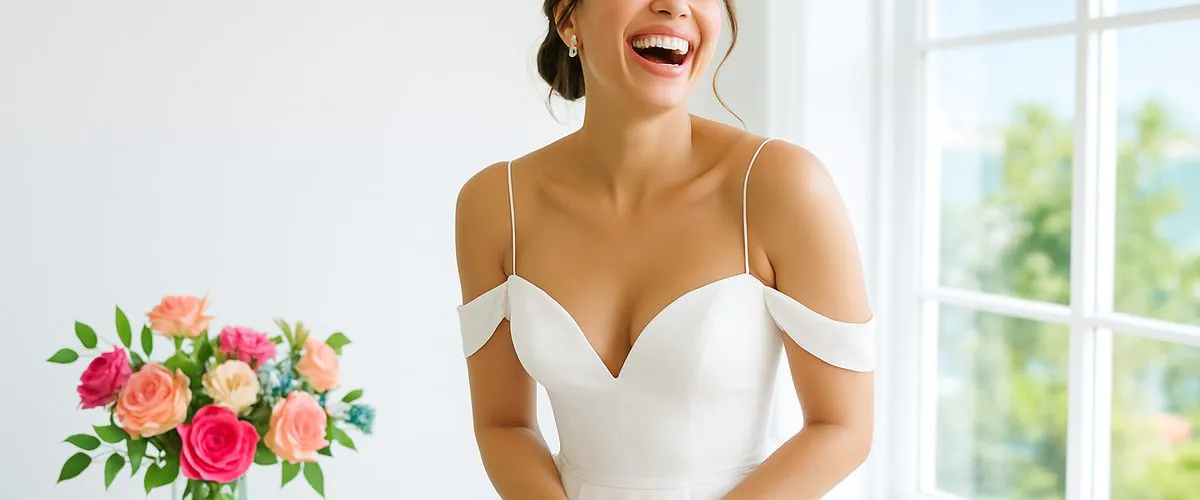
Bridal fashion in 2026 is rewriting the rules — and the results are more exciting, more wearable, and more personal than any trend cycle in recent memory.
If you’re in the middle of dress shopping, you’ve probably noticed something has genuinely shifted. The one-silhouette-fits-all bridal standard of the early decade is giving way to something broader, more individual, and more interesting. This season’s wedding dress trends for 2026 cover an impressive range: sculptural draped columns and romantic Parisian lace, reinvented strapless silhouettes with architectural neckline variations, bridal separates designed for genuine styling freedom, watercolour palettes crossing from editorial into real ceremonies, and construction that prioritizes beauty and comfort in equal measure. We’ve pulled trend data from New York Bridal Fashion Week coverage, major designer collections, and real boutique purchasing patterns to give you the complete picture — not just what looked beautiful on a runway, but what’s actually landing in fitting rooms and showing up at ceremonies this season. Here’s everything you need to know about wedding dress trends 2026.
How Bridal Fashion Is Feeling Different in 2026
The overarching mood in bridal fashion trends 2026 is best described as quietly confident and deeply personal. A few big-picture shifts define this season before we get into individual trends.
The multiple-look trend is fully mainstream. What started on TikTok — brides planning a distinct ceremony look and an entirely different reception outfit — has moved firmly onto real wedding timelines. This has supercharged demand for versatile pieces, detachable elements, and bridal separates at a rate no other single trend has matched.
Fabric storytelling has replaced embellishment as the primary language of luxury. How a dress moves, catches light, and feels against the skin now matters as much as how it photographs. Luminescent satins, fluid draped crepe, and vintage-quality lace are all prominent because they reward in-person presence in ways a heavily beaded dress simply cannot.
Colour is no longer just an editorial choice. Non-white options have expanded well beyond champagne and ivory into actual colour territory. Dusty rose, soft blue, pistachio green, and creamy butter yellow are appearing in real boutique fitting rooms, not just on magazine covers.
Deconstruction and reinterpretation are everywhere. Designers are taking foundational bridal elements — the strapless neckline, the ballgown skirt, the lace bodice — and adjusting them precisely enough to feel genuinely new without feeling costumey. Evolutions, not revolutions.
The Biggest Wedding Dress Trends for 2026
Here’s a deep look at every major direction in this season’s bridal collections — what the runway consensus means in the real world of boutique appointments and wedding-day decisions.
1. Sculptural Draping: The New Bridal Artform
If there is one aesthetic principle unifying the most talked-about gowns of the 2026 season, it is sculptural draping. This isn’t fabric simply falling loosely — it’s intentional, architectural fabric manipulation that creates tension and visual movement simultaneously.
Think artful cowl necklines where fabric is gathered with clear structural intent, asymmetrical bodices that draw the eye unexpectedly, and full skirts where tucks and pleats are as decorative as any applied embellishment. Lovely Bride’s 2026 trend reporting calls this “clean lines with an editorial, fashion-forward edge.” The dress does its work through geometry and construction rather than decoration.
The best fabrics for this look hold form while remaining fluid in motion: Italian Mikado (arguably the defining bridal fabric of this season), fluid crepe, and structured silk. Entry points into the aesthetic include asymmetrical wrap bodices, one-shoulder necklines with a drawn cowl, or skirts with pleated panels sewn at specific angles — all ways to wear the trend within a more traditional silhouette.
2. Romantic Lace, Reinvented
Parisian lace is having one of its strongest bridal moments in recent history — but how designers are using it in 2026 is meaningfully different from the full-coverage lace that dominated earlier in the decade.
Today’s bridal lace is selective and layered. Delicate lace overlay on a sheer bodice, vintage-inspired floral lace with an heirloom quality, lace trim at hem and sleeve edges: these are the applications appearing most consistently. The most exciting expression is sheer layering — fine lace over a fitted slip creates an illusion effect that is simultaneously demure and sensual. Designer houses including Elie Saab, Sareh Nouri, and Anne Barge all showed significant lace presence in their 2026 collections, from intricate Chantilly patterns to graphic geometric florals used in unexpected placements: at a single sleeve, along a back panel, or as a border detail at the neckline.
If you’ve always loved lace but felt overwhelmed by heavy all-over application, 2026 gives you more targeted options. Placement lace — used specifically where it creates the most visual impact — reads more modern and less costume-y than total coverage.
3. Bridal Separates and Two-Piece Sets
The rise of bridal separates in 2026 is arguably the most structurally significant shift in the market this season. For decades, the wedding dress was a unified entity — one garment, one silhouette, one statement. The two-piece bridal trend has fundamentally changed that conversation, and 2026 is the year it crossed from niche to mainstream.
The practical appeal is multi-layered. Separates solve one of the most persistent fit frustrations in dress shopping: when pieces are separate, you can choose different sizes for your top and bottom, eliminating the alteration headache that comes with fitting a one-piece gown across different body proportions. Beyond fit, separates offer genuine re-entry into your wardrobe after the wedding — that ivory silk midi skirt works with a cashmere turtleneck in winter; the lace-trimmed camisole pairs beautifully with tailored trousers for an anniversary dinner.
Popular configurations for 2026 include: a corset or bustier top with a full skirt (the broadest-appeal option, available in lace-on-lace, satin bodice with tulle, or brocade with organza), a structured blazer with wide-leg trousers in ivory or off-white (fashion-forward and unmistakably bridal), a minimalist high-neck bodysuit paired with a flowing floor-length skirt (excellent for outdoor and destination weddings), and an embellished brocade top with high-volume organza skirt (the most ceremony-formal application). When shopping separates, pay close attention to how pieces interact at the waistline — a clear, deliberate transition reads finished; an ambiguous one reads unfinished.
Pro tip: once your wedding day is behind you, one of the first priorities is updating your legal name across every account and agency. MissNowMrs has guided more than 500,000 newlyweds through the name change process since 2007. explore the MissNowMrs name change kit
4. The Strapless Gown Gets a Modern Makeover
The strapless bridal gown has been so foundational it almost stopped registering as a trend. In 2026, designers have taken it back to the drawing board with genuinely interesting results. Where the traditional strapless offered a simple straight horizontal line across the chest, 2026 versions are exploring substantially more considered shapes:
- The cat-eye strapless — a curved, upswept shape at the outer corners that creates a graphic, dramatic line
- The scalloped strapless — decorative scalloped edging that adds artisan detail without a separate embellishment application
- The dew drop strapless — a small central V at the center front that breaks up the horizontal line elegantly
- The envelope neckline — folded fabric creating an origami-like three-dimensional structure at the bust
- The curved semi-sweetheart hybrid — a gentler curve, more wearable for a wider range of body types
Many of these reinvented strapless gowns are being paired with capelets, detachable sleeves, or sheer overjackets for the ceremony, then removed for the reception — the two-look concept operating at its most elegant.
5. Drop-Waist Silhouettes and the ’90s-Inspired Revival
Drop-waist wedding gowns — defined by a waistline below the natural waist, elongating the bodice and shifting visual weight downward — are one of the season’s most widely cited silhouette trends. The Weddit describes the drop waist as creating “a super flattering silhouette” that gives the skirt more room to expand dramatically. In satin or structured crepe, the effect is elegant and modern; in softer draping fabrics, it reads romantic and slightly editorial.
Alongside the drop waist, slip dresses and column silhouettes with genuine ’90s minimalist energy are firmly in the conversation. A bias-cut satin with a barely-there cowl neck and a center-back slit looks spectacular in motion and photographs beautifully in golden-hour light. The basque-drop waist hybrid — blending the pointed basque waist dipping to a V at the center front with a lower-placed overall waistline — is one of the more technical silhouette innovations of the season, and it wears beautifully across a range of heights and proportions.
6. Sheer Impact and Luminescent Fabrics
Sheer and illusion fabrics are appearing in more bridal contexts than in any recent season: sheer layered bodices over structured undergarments, illusion plunge necklines that create visual drama with full coverage, sheer capes worn over fitted under-gowns, and translucent midi dresses designed for reception looks or non-traditional ceremonies. Rocky Mountain Bride’s New York Bridal Fashion Week 2026 coverage specifically called out sheer capes and overlays alongside dramatic tulle sleeves as defining detail trends — sleeves that add significant visual volume without changing the fundamental silhouette of the dress.
Closely related: luminescent fabrics — shimmering silks, polished satins, and textiles with a subtle metallic quality woven directly into the weave — are equally prominent. The critical distinction from previous sparkle cycles: the fabric itself creates the light effect, not hand-applied embellishment on top. Silk charmeuse with a liquid mirror-quality sheen, duchess satin with a high-sheen face, and subtle silver or gold-tinged fabrics that shimmer in candlelight without overpowering in daylight are all strong performers — particularly rewarding for brides planning evening ceremonies in candlelit venues.
7. 3D Florals, Micro Bows, and Concentrated Embellishments
When embellishment appears in 2026 bridal fashion, it’s deliberately placed and three-dimensional. The operative principle this season is concentration over saturation — one spectacular detail at a focal point rather than texture covering every inch of surface.
3D floral appliqués — flowers constructed from organza, silk, or velvet that sit proud of the fabric surface — are one of the most consistent details across designer collections. A single large sculptural bloom at the shoulder, a cascade of smaller handmade flowers along a skirt seam, or an asymmetrical arrangement of petals from neckline to hip: all read as artisanal and intentional rather than merely decorative. The Knot’s New York Bridal Fashion Week coverage highlights both oversized floral appliqués and micro bows as major 2026 detail directions. Small, precisely made satin bows applied at intervals along straps, necklines, or skirt seams create a playful, handmade quality that softens otherwise sleek silhouettes effectively. Rocky Mountain Bride also noted statement bows at the back and waist, pearl-dotted capes, and feather trims at hems and cuffs — each concentrated and specific, drawing the eye to one beautiful deliberate thing.
8. Watercolour and Non-White Colour Palettes
The conversation about coloured wedding dresses has crossed a meaningful threshold in 2026, moving from editorial curiosity into real-bride territory. What’s trending isn’t bold colour for its own sake — it’s soft, atmospheric, watercolour-quality hues that feel undeniably bridal while departing from the pure white and ivory tradition.
Who What Wear lists watercolour palettes as a headline 2026 bridal trend. The Knot’s designer coverage includes gowns in creamy butter yellow, dusty rose, soft blue, pistachio green, and dreamy lilac — fully realised bridal silhouettes rendered in tones that express something specific about the person wearing them. The photography case for colour is also compelling: many softer hues perform beautifully in the outdoor, golden-hour settings that dominate contemporary wedding photography. At the boutique level, dusty rose and soft blue are converting at higher rates than stylists projected even a year ago. If you’re considering a coloured gown, bring your intended accessories to the appointment — the way a dusty rose gown interacts with gold versus silver jewellery can vary dramatically and should be part of the decision.
9. Removable Elements and the Two-Look Dress
Removable elements — detachable sleeves, overskirts, trains, jackets, and capelets — are a defining feature of the most thoughtfully designed 2026 gowns. Maggie Sottero’s 2026 collections are explicit about this as a design priority: detachable sleeves and jackets allow the ceremony look to be more formal and covered — meeting religious venue requirements or personal preference — while the underlying dress transforms into something lighter the moment the outer layer comes off.
The 2026 execution is more sophisticated than previous iterations. Where early two-look gowns felt like two ideas awkwardly combined, current versions are designed from the outset as unified garments with a deliberately planned reveal. Designers like Viktor & Rolf, Justin Alexander, and HONOR have all shown versions where the removal of the outer element is itself a fashion statement — a moment of visual punctuation built into the reception entrance. If your ceremony venue has formality or modesty requirements your ideal dress doesn’t fully meet, a two-look design solves the problem elegantly.
Silhouettes Dominating Bridal Fashion in 2026
Beyond specific trend details, here are the foundational shapes delivering most strongly this season and what distinguishes the 2026 version of each.
Ball gown: Not leaving — but the 2026 version pairs one spectacular element with restraint everywhere else. A striking full-volume skirt with a clean, minimal bodice; an intricately detailed bodice with a smooth skirt. The “everything at once” ball gown has given way to the “one great thing” version, which is harder to design well and looks substantially more elevated in person.
Column and sheath: Having one of their strongest bridal seasons in recent memory. Sleek columns are prominent in 2026, often featuring sculptural draping at the neckline or luminescent fabrics that create visual interest without structural complexity. These are the dresses that look spectacular in motion and photograph beautifully in golden-hour light.
A-line: The reliable workhorse, elevated in 2026 with lace overlays, reinvented strapless neckline variations, and hand-painted or silk-organza fabric details that add an artisan quality to an otherwise classic shape. The silhouette most naturally accommodates 2026’s range of trend details without requiring significant design risk — still the strongest starting point if you’re uncertain about silhouette preference.
Mermaid and fit-and-flare: Particularly well suited to the luminescent fabric trend. A high-sheen satin mermaid catching and releasing light at the hips through the dramatic flare is one of the season’s most striking bridal images. For brides who want body-conscious structure and show-stopping movement combined, the mermaid remains unmatched.
Bridal midi and tea-length: Firmly established as a genuine option in 2026, no longer categorized as “alternative.” The Knot specifically notes midi dresses “elevated with embellishments” as part of the mainstream bridal trajectory. Ideal for outdoor summer ceremonies, elopements, destination weddings, and intimate gatherings where a full-length gown feels disproportionate to the setting.
What’s Out (or Fading) in 2026
- All-over rhinestone coverage with no focal point. The fully encrusted approach is fading meaningfully. In 2026, wall-to-wall beading often reads as visually overwhelming and aesthetically dated. Placement and concentration have replaced total surface coverage.
- Ultra-structured, heavily boned corsets as the default bodice. The corset hasn’t disappeared — it’s softened. The punishing, maximum-cinch silhouette has given way to gentler boning and more natural shaping that works with the body rather than aggressively reshaping it.
- The single, unchanging look for an entire wedding day. With the two-look trend mainstream, planning only one outfit now reads as a missed opportunity rather than a practical choice.
- Rigid cathedral megagowns for their own sake. The cathedral-length train persists, but in 2026 it appears as part of a considered design rather than an automatic formality add-on. A train for its own sake, on an otherwise conventional gown, feels increasingly like a box being checked.
- The unmodified sweetheart strapless as the obvious default. The traditional sweetheart shape still exists, but against the reinvented strapless options described above, it now reads as the safe, unremarkable choice.
- Pure cold white as the only conversation. Non-white options are no longer an exception to be explained. Any stylist worth working with is exploring the expanded palette alongside traditional options, not as an afterthought.
What Brides Are Actually Wearing
Runway trends and real-bride choices don’t always overlap — but 2026 is a year where the gap has narrowed considerably. The most consistently ordered bridal style in real boutiques remains the A-line with romantic lace detail — a combination that has held its ground across every major trend cycle and shows no sign of ceding it. The 2026 variations on the lace A-line are strong enough to justify its continued dominance.
The second most frequently requested category: fitted, minimal satin column gowns. Brides in their late twenties and thirties deliberately moving away from the princess aesthetic are pulling directly from the ’90s minimalism revival, and they know exactly what they want.
Real-bride behaviour around colour is equally telling. More brides than ever are trying non-white options in boutiques, even when they came in certain they’d leave in ivory. Dusty rose and soft blue in particular are converting at meaningfully higher rates than the industry projected. Among the wedding dress trends for 2026, colour’s shift from editorial to real-bride territory is one of the most significant.
What this means practically: the gap between “the safe choice” and “the trend-forward choice” in 2026 bridal shopping is smaller than it has ever been. The looks landing on runways are actually wearable. Personal taste remains the best filter — but you have more genuinely interesting options this season than in most recent years.
Choosing Your 2026 Wedding Dress: Practical Guidance
Start with your venue and ceremony type
Your setting is still the strongest filter you have. A sculptural draped column reads sophisticated in a modern, light-filled venue; it can feel out of register in a traditional cathedral. A ball gown with voluminous tulle needs physical space — right at home in a large ballroom, less practical in an intimate garden ceremony where you’ll navigate between tables and guests all evening. Map the dress to where it will actually live, not just to how it looks on an inspiration board.
Evaluate the dress in motion, not just standing still
Every gown you try should be assessed while walking, turning, sitting, bending toward the floor, and dancing in place. The 2026 trend toward comfort-forward design reflects years of brides realising too late that the dress performing best in static photographs was the one they couldn’t fully enjoy wearing. The dress that allows you to be fully present at your own wedding is the right dress, full stop.
Understand your timeline and account for it
Most made-to-order designer wedding gowns require a minimum of four to six months for production, plus additional time for fittings and alterations. If your wedding is within that window, ask specifically about ready-to-wear options, sample sales, or rush production programs before falling in love with a gown that can’t reach you in time. Bridal separates often have shorter lead times than full-length made-to-order gowns, which makes them a practical advantage for compressed timelines in addition to all their other appeal.
Budget your accessories as part of the full look
In 2026, the accessories story is doing as much editorial work as the dress itself. The Knot’s collection coverage calls out mantilla veils, fingerless gloves, pearl crossbody bag straps, pearl collar necklaces, and bridal chokers as the accessory directions with the most cultural momentum this season. A minimalist column gown with a dramatic mantilla veil reads completely differently than the same dress with simple stud earrings — and both are valid, but the choice matters significantly. Budget your accessories as part of the total look from the beginning, not as an afterthought after the dress decision is made. post-wedding checklist for newlyweds
Frequently Asked Questions About 2026 Wedding Dress Trends
What is the most popular wedding dress style for 2026?
Across runway consensus and real boutique purchasing data, the A-line silhouette with romantic lace detail remains the most consistently chosen style. Among trend-forward choices, sculptural draped column gowns and bridal separates are seeing the strongest year-over-year sales growth. The honest answer in 2026 is that there is no single dominant style — the market is genuinely diverse, which reflects the broader personal-expression ethos defining this year’s bridal fashion more than any single silhouette does.
Are coloured wedding dresses a real 2026 trend, or just an editorial concept?
Coloured wedding dresses have meaningfully crossed into real-bride territory for 2026. The most popular non-white options converting in boutique appointments are soft, atmospheric tones — dusty rose, warm butter yellow, soft blue, and pistachio green — rather than dramatically saturated colours. Brides who come in thinking they’ll try a coloured gown “just to see” are leaving with non-white decisions at increasing frequency. Fully saturated bold-colour dresses remain more editorial than mainstream, but the non-white conversation is happening in real shopping appointments at significantly higher rates than in previous years.
What fabric is trending for wedding dresses in 2026?
Several fabrics are having strong moments this season. Italian Mikado is arguably having its biggest bridal season ever, valued for combining structure with fluid, graceful movement few other fabrics can match. Luminescent satins and silk charmeuse are prominent in the column and sheath category for their light-catching quality without surface embellishment. Sheer organza and layered tulle appear in capes, overskirts, and illusion panels. Vintage-quality lace in Chantilly and delicate floral patterns remains strong, applied more selectively and intentionally than in previous years. The overarching fabric preference in 2026 leans toward materials that do visual work through their own inherent properties rather than through heavy hand-applied decoration.
How do I choose a wedding dress that will still look beautiful in photos twenty years from now?
Focus on silhouette and proportion rather than specific embellishment fashion. The foundational shapes — A-line, column, ball gown, mermaid — have remained consistently beautiful in wedding photography across decades. What dates a dress most visibly is usually a very specific embellishment trend or neckline variation that was intensely of its moment. If you love a 2026 trend, try expressing it through one focused detail — the sculptural draping at the neckline, the non-white colour, the lace overlay technique — while keeping the rest of the design clean and structurally timeless. The dress that will still look genuinely beautiful at your twentieth anniversary viewing is the one with one great thing done exceptionally well, not every trend applied simultaneously.
After the Dress Comes the Rest of Your New Life
You found the gown. You made the decision — the silhouette, the fabric, the neckline, the shoes, the veil or no-veil. You planned the ceremony look and the reception look and which accessories carry which register. You said yes to the dress, and then you said yes to each other.
And then real life begins. The honeymoon, the thank-you notes, the setting up of a shared home, the conversations about every practical thing you’ve been putting off until after the wedding. One of those things — one that surprises almost every newlywed with how much it actually involves — is the name change process.
Whether you’re taking your partner’s name, hyphenating, or choosing something entirely your own, updating your legal name after marriage means contacting the Social Security Administration, your state DMV, the U.S. State Department for your passport, your bank and financial accounts, your employer, your insurance providers, and more. It is more than most newlyweds expect, and less overwhelming than it sounds — when you have a clear system.
MissNowMrs has helped more than 500,000 newlyweds navigate every step of the name change process since 2007. You put real care and thought into choosing your dress. Put the same care into starting your married life without a pile of paperwork waiting when you get home from the honeymoon. get started with your MissNowMrs name change kit
Here’s to saying yes to the dress — and to everything that comes beautifully after it.